


Upcoming Exhibition: Reclaiming the Body – Grete von Glashagen, Emanuel Crepaz, Ethan Edoardo Asper feat. Frida Orupabo
Opening: 2.10.2026, 7 p.m.Exhibition: 3.10.2026 – 7.11.2026Curated by Giulia Cordin and Eva LeitolfIn collaboration with Studio Image/unibz, BAW, Galerie Nordenhake
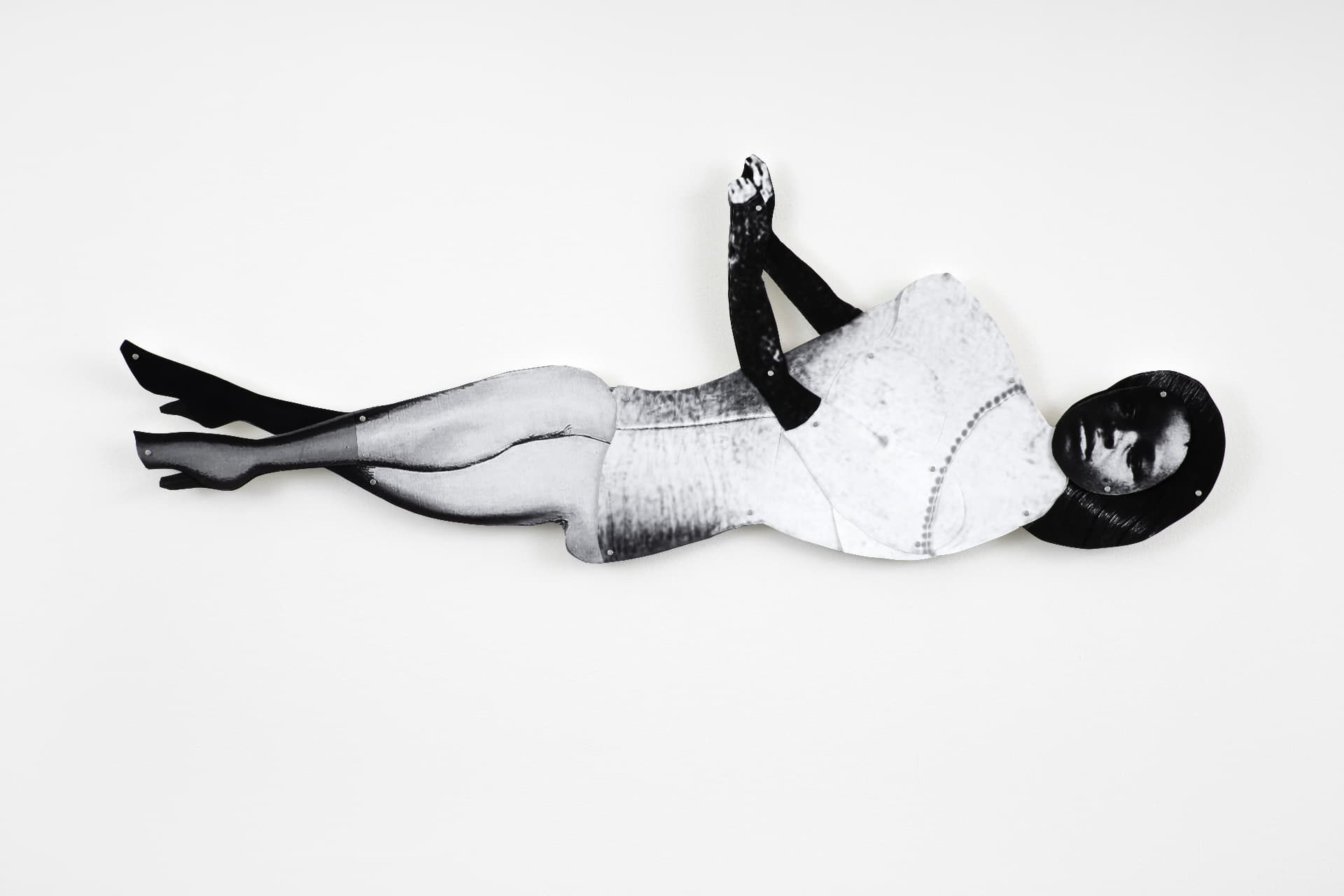
Courtesy: Frida Orupabo and Galerie Nordenhake Berlin/Stockholm/Mexico City, “Falling from horse” 2024. @Gerhard Kassner. Exhibition “Reclaiming the Body” by Foto Forum, Bolzano/Bozen (Italy), 2026
Reclaiming the Body brings together feminist, queer, and Black artistic practices that critically examine representations of the body, gender, and sexuality in contemporary visual culture. The exhibition is grounded in the understanding that identity, gender roles, and forms of desire are neither natural nor purely individual phenomena, but rather historical and social constructions shaped by power relations, cultural norms, and processes of exclusion.
Through diverse artistic approaches and perspectives, the works on view explore how images contribute to the production, legitimization, and subversion of these structures, making visible the mechanisms that discipline bodies and determine who can be seen, desired, heard, or represented. The body thus emerges as a site of conflict and negotiation, where questions of gender, race, class, sexuality, and belonging intersect and unfold.
The exhibition addresses themes such as the construction of gender roles, body politics, self-representation, queerness, pornography, the performativity of identity, and the commodification of desire. Through strategies ranging from the appropriation and reclamation of images to the deconstruction of stereotypes, from autobiographical narratives to critiques of visual media, the participating artists challenge normative models and dominant imaginaries.
In this context, the body appears not only as an object of social control, surveillance, and categorization, but also as a space of resistance, self-determination, and political transformation. Reclaiming the Body invites audiences to reflect on how identities are constructed and represented, and on how artistic practices can create spaces for visibility, emancipation, and collective imagination, reclaiming the body as a territory of freedom, agency, and possibility.
Complementing the artworks, the exhibition showcases book projects by Alixe Côté, Emanuel Crepaz, Alessia Formica, Maria Sole Gorni and Sophia Sacchelli.
Frida Orupabo
Ada, 2024
CMYK print on anodised aluminium, spraypainted steel
Falling from horse, 2024
collage: pigment print on acid-free cotton paper, mounting tape, split pins
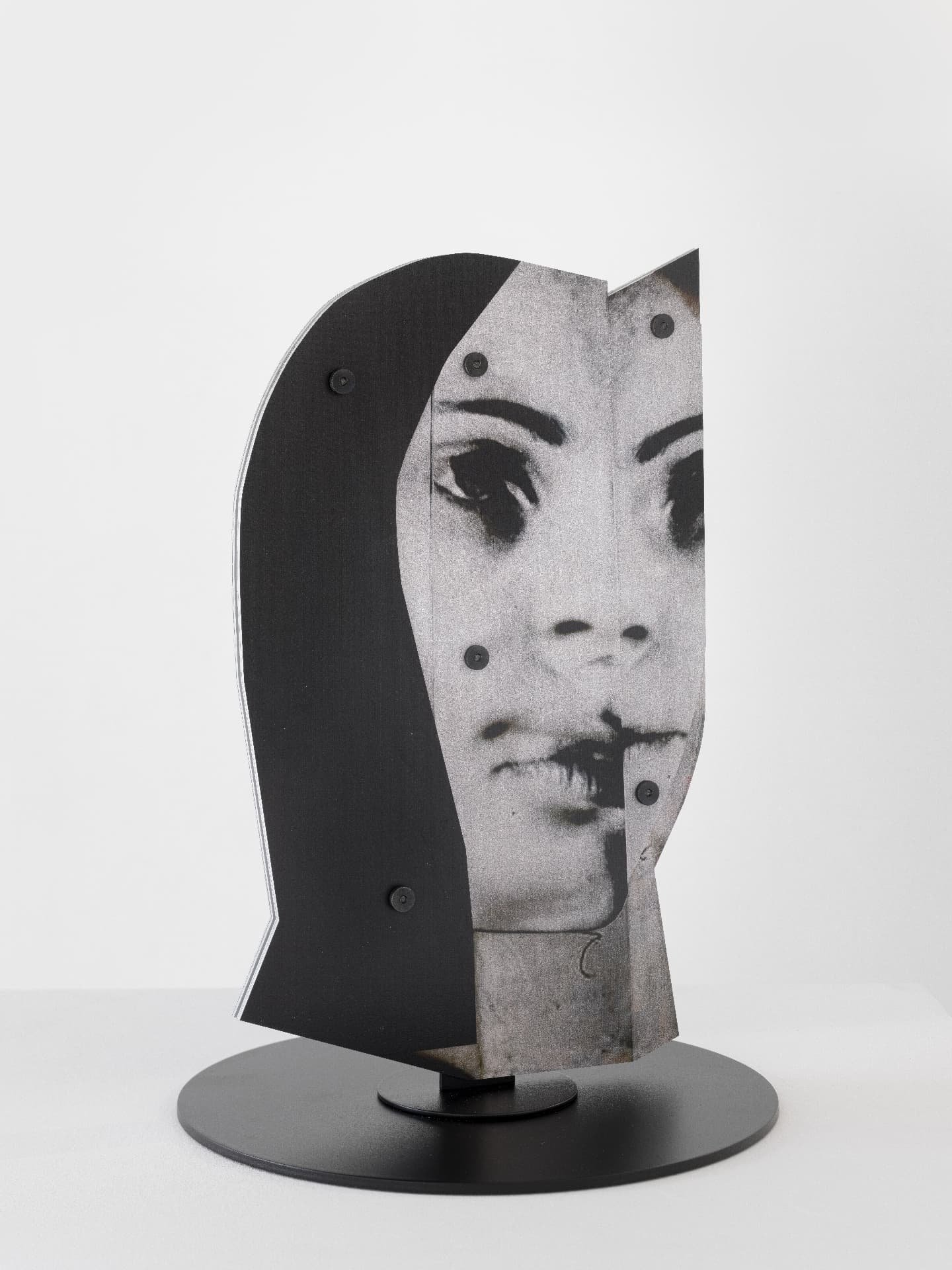
Courtesy by Mette Ulstrup & Frida Orupabo and Galerie Nordenhake Berlin/Stockholm/Mexico City, “Ada” 2024. @Gerhard Kassner. Exhibition “Reclaiming the Body” by Foto Forum, Bolzano/Bozen (Italy), 2026
Norwegian Nigerian artist and sociologist Frida Orupabo creates analogue and digital collages and video installations from visual material circulating online. From photographs from the colonial era as well as from contemporary imagery, from ethnography, medicine, and science to art and pop culture, Orupabo dissects representations of the Black, mostly female body as a means to negotiate themes of colonial violence, racism, sexuality, identity, and belonging.
In rearranging and newly reassembling the dissected fragments, Orupabo creates figures of resistance that challenge how and what we see in a present-day reality that remains permeated by colonialism.
Grete von Glashagen
Aftertouch Vol. 1, 2025
9′ 30” three-channel video installation
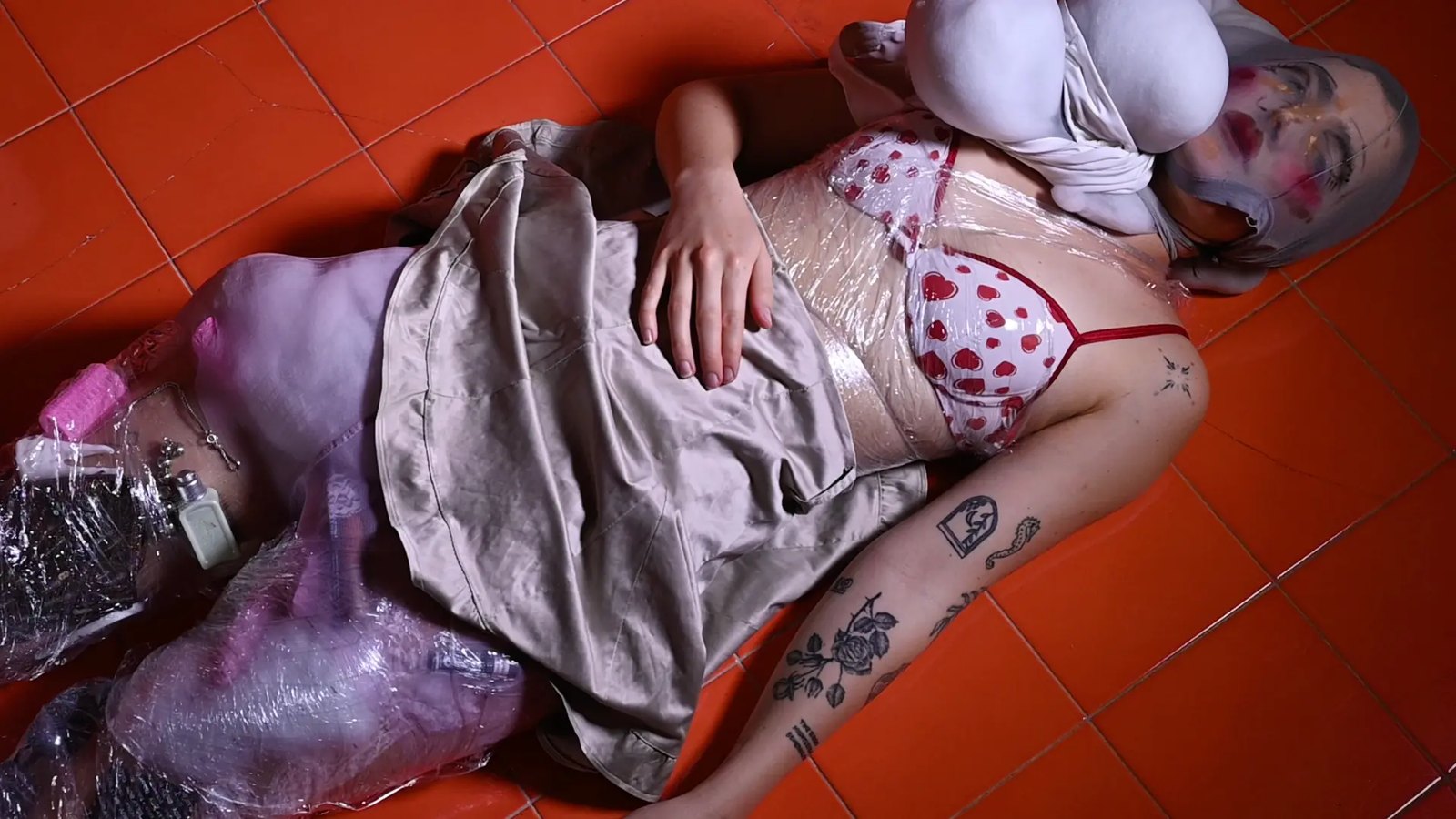
Grete von Glashagen: Aftertouch Vol. 1, 2025, Exhibition “Reclaiming the Body” by Foto Forum, Bolzano/Bozen (Italy), 2026
Aftertouch Vol.1 is an ambiguous title, alluding on the one hand to a musical term that describes the lingering pressure on a key after it is struck, and in an allegorical sense to the emotional echo of a sexual assault. The work consists of a three-channel video installation paired with a performative part, which explores the complex, mutated and twisted terrain of female sexual agency and pleasure.
Through stroboscopic projections in a darkened space, techno music and layered spoken word, the piece creates a bizarre tension between agitated anticipation, sensory overload, and paralyzing horror. The core of the work consists of the song text: three stories, which were told to the artist by women close to her—stories of sex, power dynamics, and violation.
How is female sexuality shaped by internalized and external power structures? Female desire and lust seem indistinguishable from trauma, and in order to separate the two, word by word, memory by memory, must first be critically examined and, above all, called by their name.
Aftertouch Vol.1 is the first part of an ongoing series based on interviews and stories from countless other women.
I have another story, and if you want, I can tell you. It is kinda hard to hear though. Do you want to hear it? Are you sure you don’t want to hear it? I think I should tell you. You don’t? You don’t wanna hear it? I’m gonna tell you, yes. I will tell you. Ready?
Emanuel Crepaz
Ongoing, 2026
6′ 13” video
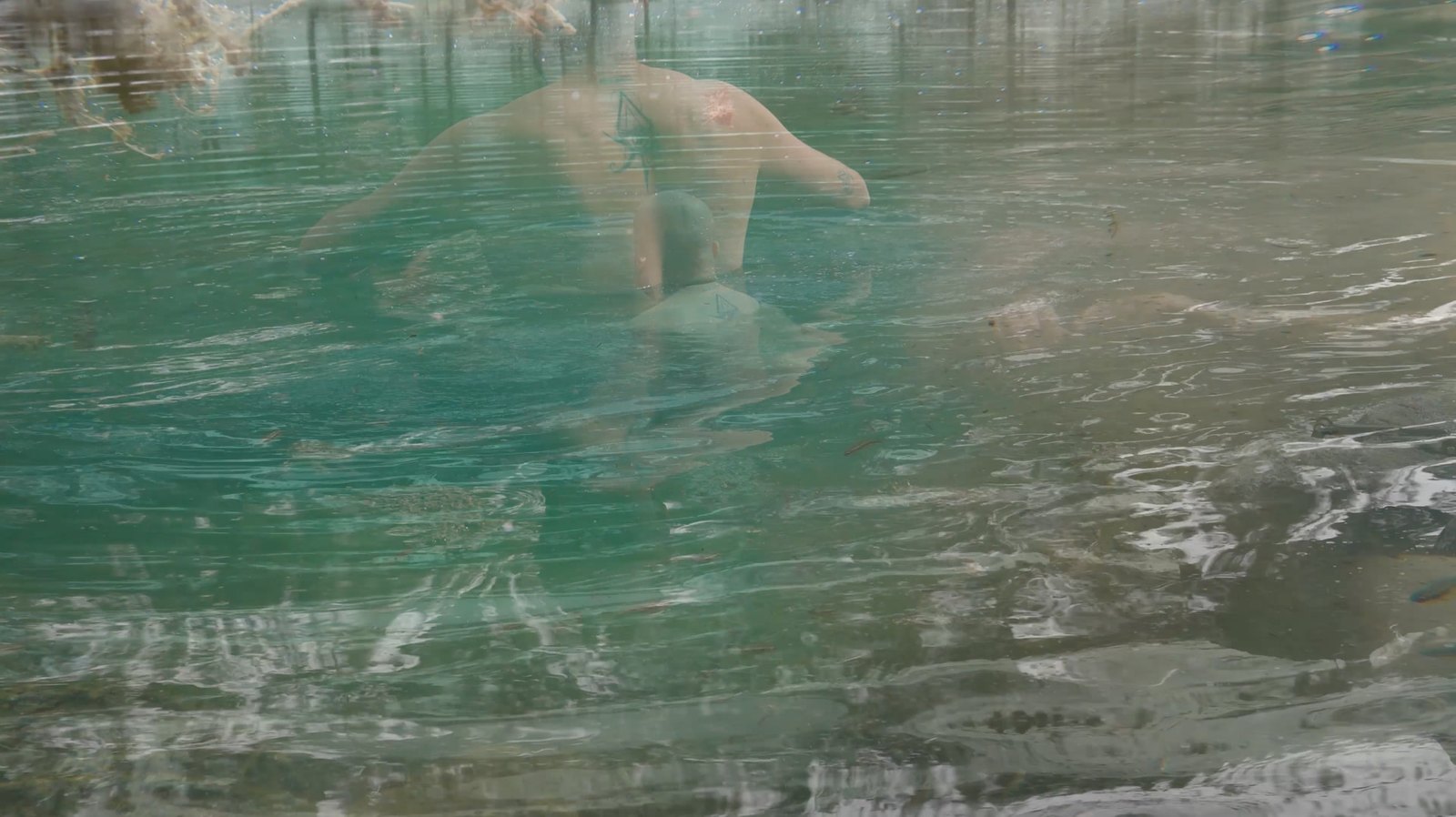
Emanuel Crepaz: Ongoing, 2026. Exhibition “Reclaiming the Body” by Foto Forum, Bolzano/Bozen (Italy), 2026
Have you ever felt looked at? Have you ever felt seen? How did it feel? How does that moment look like, when you realize you are finally seen, and not just looked at? When does that shift happen?
And when I’m looking at myself instead of seeing myself, what does help me out? What is the relationship between being looked at and being seen?
The work process started outwards, from conversations, and turned more inwards in the search for seeing an inner world, for making space and time to navigate the own awareness, seeing and absorbing it, and finally releasing it.
In the underwater world, where a feeling of further fluidity comes across, a process of building strength by being vulnerable and letting layers go takes place.
Yo no soy yo.
Soy éste,
Que va a mi lado sin yo verlo;
que, a veces, olvido.
El que calla, sereno, cuando hablo,
el que perdona, dulce, cuando odio,
el que pasea por donde no estoy,
el que quedará en pie cuando yo muera.
(Juan Ramón Jiménez)
Emanuel Crepaz and Ethan Edoardo Asper
A Day at the Lake, 2026
2′ 37″ 4K video
Unfinished collaborative project.
Books by
Alixe Côté
Emanuel Crepaz
Alessia Formica
Maria Sole Gorni
Sophia Sacchelli
Special Thanks
Mette Ulstrup & The Artist and Galerie Nordenhake Berlin/Stockholm/Mexico City
